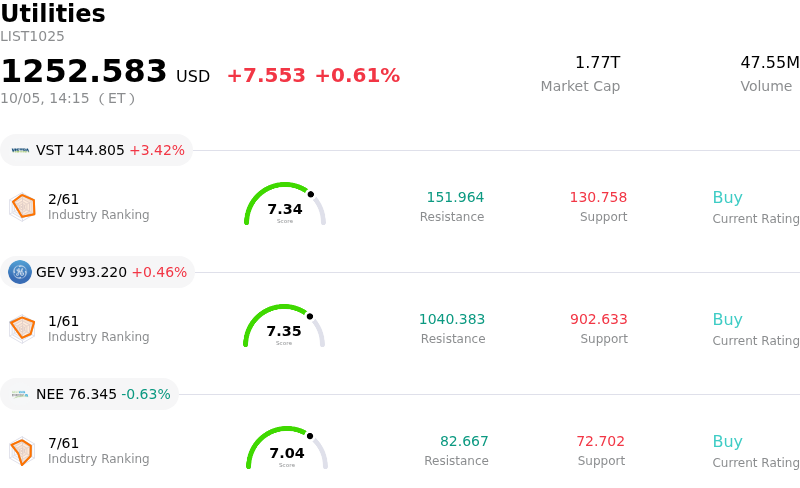
Companhia de Saneamento Basico do Estado de Sao Paulo - SABESP (SBS) moved up by 17.84%. The Utilities sector is up by 0.61%. The company outperformed the industry. Top 3 stocks by turnover in the sector: Vistra Corp (VST) up 3.48%; Ge Vernova Inc (GEV) up 0.46%; $Nextera Energy Inc(NEE-N)$ (NEE) down 0.63%.
What is driving Companhia de Saneamento Basico do Estado de Sao Paulo - SABESP (SBS)’s stock price up today?
Companhia de Saneamento Basico do Estado de Sao Paulo, known as Sabesp, registered a sharp upward move accompanied by elevated trading volume and significant intraday volatility. The bullish price action was primarily fueled by renewed investor confidence following corporate clarifications regarding its post-privatization capital structure and strategic expansion roadmap. Market participants reacted positively to recent corporate disclosures confirming shareholder approval of amended bylaws and long-term capital plans aimed at accelerating infrastructure investments across Sao Paulo state.
From a technical perspective, the stock experienced a powerful opening gap that breached key short-term resistance levels following a period of base-building consolidation. Institutional demand for defensive emerging market utility assets provided additional momentum, as investors reassessed Sabesp's resilient regulated cash flows, long-term tariff indexing, and operational efficiency initiatives under private control. Despite cost inflation and margin pressures noted in prior quarterly performance metrics, market sentiment turned decidedly optimistic regarding the utility's long-term capital expenditure execution and sanitation coverage goals.
Looking ahead, institutional focus will remain centered on upcoming quarterly financial results, regulatory tariff reviews, and management's ongoing execution of its extensive investment program. While macroeconomic conditions in Brazil and foreign exchange volatility continue to represent operational background risks, the strong upward momentum reflects robust buying interest as fundamental clarity improves and technical momentum attracts capital back into the stock.
Technical Analysis of Companhia de Saneamento Basico do Estado de Sao Paulo - SABESP (SBS)
Technically, Companhia de Saneamento Basico do Estado de Sao Paulo - SABESP (SBS) shows a MACD (12,26,9) value of 0.144, indicating a buy signal. The RSI at 79.536 suggests buy condition and the Williams %R at 1.158 suggests overbought condition. Please monitor closely.
Fundamental Analysis of Companhia de Saneamento Basico do Estado de Sao Paulo - SABESP (SBS)
Companhia de Saneamento Basico do Estado de Sao Paulo - SABESP (SBS) is in the Utilities industry. Its latest annual revenue is $6.81B, ranking 1 in the industry. The net profit is $1.51B, ranking 1 in the industry. Company Profile
Over the past month, multiple analysts have rated the company as Strong Buy, with an average price target of $6.78, a high of $7.31, and a low of $6.30.
More details about Companhia de Saneamento Basico do Estado de Sao Paulo - SABESP (SBS)
Company Specific Risks:
- Post-Privatization Capital Restructuring & Dilution Risk: Recent corporate updates clarifying post-privatization bylaws and capital structure have raised concerns around authorized share capital increases, triggering institutional anxiety over potential equity dilution and shifting governance frameworks.
- Cash Flow Squeeze & Elevated Financial Leverage: Heavy debt obligations alongside negative free cash flow and rising borrowing costs are straining liquidity, making it increasingly difficult to cover dividend commitments and fund ongoing capital expenditure programs.
- Operating Margin Compression & Earnings Misses: Financial performance continues to suffer from contracting EBITDA margins and higher-than-expected operational spending, which recently caused quarterly revenue and earnings to miss analyst consensus targets.
- Macroeconomic & Foreign Exchange Volatility: Primary operations in Brazil expose the ADR to foreign exchange fluctuations in the Brazilian Real (BRL), domestic interest rate dynamics, and regulatory uncertainties surrounding municipal tariff adjustment schedules.
Find out more